

In the fast-paced world of retail, banking, and business management, “Cash is King.” But managing that cash—counting it, sorting it, and verifying its authenticity—can be a nightmare. Manual counting is slow, prone to human error, and leaves businesses vulnerable to the growing threat of counterfeit currency.
This is where the cash counting machine becomes an indispensable asset. Whether you run a small retail shop or a high-volume financial institution, automating your cash handling process is no longer a luxury; it is a necessity.
In this comprehensive guide, we will break down the entire landscape of note counting machines in India. We will explore the technology behind fake note detectors, analyze the return on investment (ROI), and most importantly, dissect the price ranges—specifically focusing on the three key market tiers you are interested in: the Starting Normal Model (₹4,800), the Mix Model (₹9,500), and the Top Model (₹75,000).
Table of Contents
- Why Your Business Needs a Cash Counting Machine
- Understanding the Technology: How Fake Note Detectors Work
- Tier 1: The Entry-Level Warrior (₹4,800 Range)
- Best For: Small Retailers, Kirana Stores
- Tier 2: The Smart “Mix Note” Specialist (₹9,500 Range)
- Best For: Supermarkets, Petrol Pumps, mid-sized businesses
- Tier 3: The Heavy-Duty Powerhouse (₹75,000 Range)
- Best For: Banks, Casinos, Cash Management Companies
- Comparative Analysis: Feature vs. Price
- Maintenance and Longevity
- Conclusion: Which One Should You Buy?
Why Your Business Needs a Cash Counting Machine
Before we dive into the specific models and prices, it is crucial to understand value. A machine that costs ₹75,000 might seem expensive, but if it prevents a loss of ₹10 lakhs in counterfeit notes over five years, it is a bargain. Conversely, a small shop doesn’t need bank-grade sorting features.
The Hidden Costs of Manual Counting
- Human Error: A tired employee at the end of a 10-hour shift is likely to make mistakes. Miscounting a bundle by just one ₹500 note daily leads to a loss of ₹1.8 Lakhs over ten years.
- Counterfeit Risk: Counterfeiters are getting smarter. High-quality fakes often pass the “feel test.” A machine doesn’t feel; it scans.
- Time Theft: If your cashier spends 45 minutes a day counting and reconciling cash, that is 270+ hours a year—time that could be spent serving customers or managing inventory.
Key Takeaway: A note counting machine is not an expense; it is an investment in accuracy and security.
Understanding the Technology: How Fake Note Detectors Work
When you see a machine listed with “UV/MG/IR Detection,” what does that actually mean? Understanding these acronyms is key to knowing what you are paying for in the ₹4,800 vs. ₹75,000 models.
UV (Ultraviolet) Detection
This is the most common feature found even in base models. Genuine currency notes are printed on non-fluorescent paper, but they contain specific security threads or fibers that glow under UV light.
- How it works: The machine shines a UV light on the note. If the paper itself glows (which cheap paper often does), or if the specific UV features are missing, the machine flags it as fake.
MG (Magnetic) Detection
Indian currency notes (and many international currencies) use ink with magnetic properties, specifically in the serial numbers and the security thread.
- How it works: A magnetic sensor in the machine “reads” the note as it passes over the head. If the magnetic signature is missing or disrupted, the machine stops. This is harder for counterfeiters to replicate than visual features.
IR (Infrared) Detection
This is a more advanced feature usually found in mid-range to top-end models.
- How it works: Certain inks absorb or reflect IR light differently. An IR sensor looks for “hidden” patterns that are invisible to the naked eye but clear under infrared spectrums.
MT (Metal Thread) Detection
This specifically targets the metallic security thread woven into the note. It is a highly reliable method for detecting high-quality fakes.
3D/Size Detection
This checks the physical dimensions of the note (length, width, and thickness). If a ₹100 note is cut slightly smaller than a standard ₹100 note, or if a different denomination is hidden in a bundle, this feature catches it.
Tier 1: The Entry-Level Warrior (₹4,800 Range)
The “Normal Model”
- Price Point: ~₹4,800
- Target Audience: Small grocery shops, medical stores, ticket counters, and small offices.
At the ₹4,800 mark, you are looking at the foundational cash counting machine. These machines are workhorses designed for one primary purpose: Counting Pieces.
Key Features
- Piece Counting Only: These machines count how many notes are in the stack. They do not calculate the value. If you put in a stack of ten ₹500 notes, the display will show “10,” not “5000.”
- Basic Fake Note Detection (UV/MG): Almost all models in this range come with UV and MG sensors. This covers about 80-90% of basic counterfeit notes circulating in local markets.
- Speed: They are surprisingly fast, often capable of counting 900–1,000 notes per minute.
- Batch Function: You can tell the machine to stop after every 50 or 100 notes, which is useful for bundling cash for bank deposits.
Pros
- Affordability: Low barrier to entry.
- Simplicity: Very easy to use; typically “plug and play.”
- Portability: Usually lightweight and compact.
Cons
- No Value Calculation: You must sort notes by denomination before putting them in. You cannot mix ₹100 and ₹500 notes; the machine will count them as “2 pieces” without knowing their value.
- Basic Detection: May miss high-quality “Super Fake” notes that require IR or 3D detection.
- Durability: Built for light to medium usage. Running them continuously for hours may overheat the motor.
Verdict: If you have a single cash counter and sort your cash manually before counting, the ₹4,800 model is perfect. It removes the drudgery of flipping through notes by hand.
Tier 2: The Smart “Mix Note” Specialist (₹9,500 Range)
The “Mix Model”
- Price Point: ~₹9,500
- Target Audience: Petrol pumps, supermarkets, wholesale dealers, restaurants.
This is the “Sweet Spot” for most growing businesses. The jump from ₹4,800 to ₹9,500 gives you a massive upgrade in intelligence: Value Counting Technology.
Key Features
- Mix Value Counting: This is the game-changer. You can take a messy stack of ₹10, ₹20, ₹100, ₹500, and ₹2000 notes, put them all in the hopper together, and the machine will tell you the Total Value (e.g., “₹45,200”) and the breakdown (e.g., “5x ₹500, 10x ₹2000”).
- Advanced Detection (UV/MG/IR/MT): At this price point, you typically get Infrared (IR) sensors, which significantly improves the accuracy of the fake note detector.
- Voice/LCD Display: These models often come with a larger, color-changing LCD display (turning red on error) and sometimes a voice feature that announces the total.
- Sorting Capability: While not a full sorter, many “Mix” models can stop if they detect a different denomination note in a single-denomination mode.
Pros
- Time Saving: No need to pre-sort cash. Just drop the bundle in.
- Higher Security: IR sensors catch better fakes.
- Reporting: Gives a clear breakdown of denominations on screen.
Cons
- Hopper Limitation: Usually a back-loading hopper, meaning you have to place notes carefully to avoid jams.
- Maintenance: More sensors mean it requires more regular cleaning (dusting) to maintain accuracy.
Verdict: The ₹9,500 Mix Model is the best ROI for businesses with moderate cash flow. The ability to dump a mixed bundle of cash and get an instant total value saves hours of manual sorting every week.
Tier 3: The Heavy-Duty Powerhouse (₹75,000 Range)
The “Top Model”
- Price Point: ~₹75,000
- Target Audience: Banks, Casinos, CIT (Cash-in-Transit) Companies, Large Jewelers.
Why would anyone pay ₹75,000 when a ₹9,500 machine counts mixed notes? The answer lies in Volume, Fitness, and Sorting. These machines are not just counters; they are Cash Management Systems.
Key Features
- Fitness Sorting: This is a distinct feature of top-tier machines. They can separate “ATM Quality” (fresh, crisp) notes from “Soiled” (old, taped, dirty) notes. This is critical for banks that need to refill ATMs.
- Multi-Pocket Sorting: Unlike the lower tiers, these machines often have a “Reject Pocket.” If a fake or unreadable note is found, the machine does not stop. It kicks the bad note into a separate tray and keeps counting at high speed. This ensures uninterrupted processing.
- Heavy Duty Duty Cycle: Built with steel components and heavy-duty motors, these machines can run 24/7 without overheating.
- Serial Number Recognition: Some top models can scan and record the serial number of every single note counted, providing a digital audit trail.
- Multi-Currency: Capable of handling USD, EUR, GBP, and INR simultaneously.
Pros
- Uninterrupted Speed: The reject pocket ensures the machine never stops for a bad note.
- Bank-Grade Detection: Uses CIS (Contact Image Sensor) technology to scan the full image of the note, offering 99.99% fake detection accuracy.
- Longevity: Built to last for a decade or more of heavy use.
Cons
- Cost: High initial capital expenditure.
- Size: These are bulky, heavy desktop units.
Verdict: If your business processes lakhs of rupees daily and cannot afford downtime or errors, the ₹75,000 model is the only professional choice.
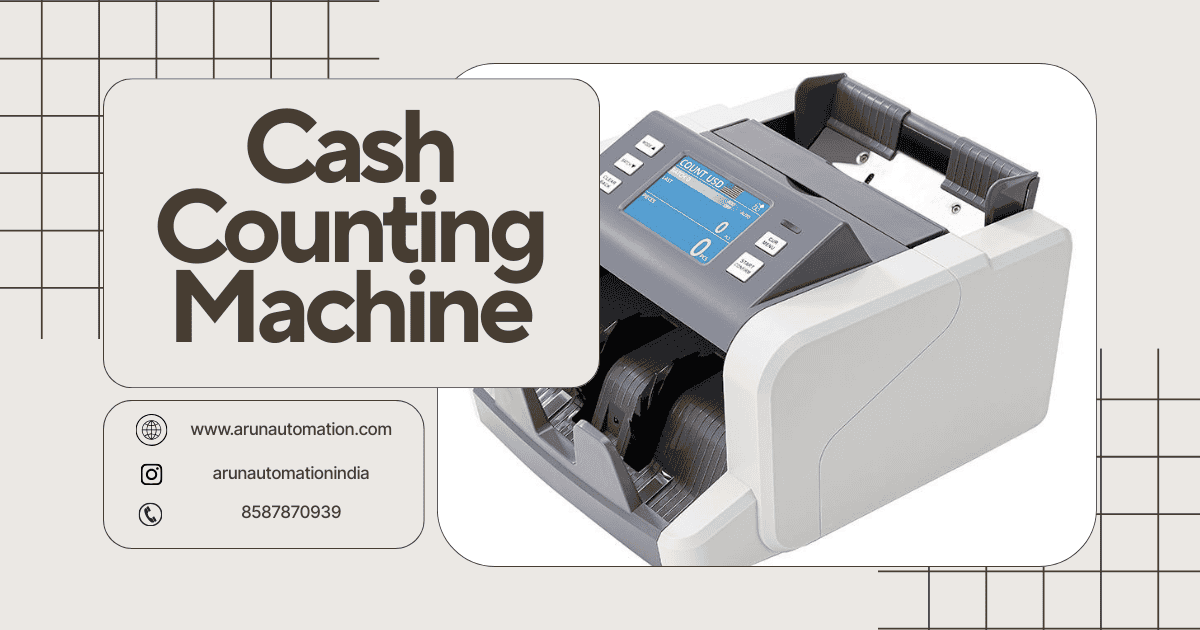
6. Comparative Analysis: Feature vs. Price
| Feature | Normal Model (₹4,800) | Mix Model (₹9,500) | Top Model (₹75,000) |
| Counting Type | Pieces Only | Mix Value & Pieces | Mix Value, Pieces & Sorting |
| Pre-Sorting Req. | Yes (Must sort manually) | No (Can mix notes) | No (Can mix & sort fitness) |
| Fake Detection | UV, MG | UV, MG, IR, MT | UV, MG, IR, MT, CIS (Image) |
| Reject Pocket | No (Stops on error) | No (Stops on error) | Yes (Non-stop counting) |
| Usage Limit | ~2-3 hours/day | ~4-6 hours/day | Continuous / Heavy Duty |
| Serial Number Reading | No | No | Yes (Select models) |
Maintenance and Longevity
Regardless of the price range, a note counting machine is a mechanical device with moving parts (rollers, belts) and sensitive optical sensors.
- Dust is the Enemy: Money is dirty. Dust from notes accumulates on the sensors (UV/MG).
- Tip: Use a compressed air can or a soft brush to clean the sensors once a week. If the sensors are dirty, a ₹75,000 machine will perform worse than a clean ₹4,800 machine.
- Rubber Roller Wear: Over time, the rubber wheels that pull the notes will wear down. If you notice the machine jamming frequently or pulling two notes at once, it’s time to replace the rubber parts (usually inexpensive).
- Calibration: If the Reserve Bank of India (RBI) releases a new note series (new size or design), your machine may need a software update.
- Note: The ₹4,800 models often cannot be updated. The ₹9,500 and ₹75,000 models usually have USB ports for software upgrades.
Conclusion: Which One Should You Buy?
The decision ultimately comes down to your “Cost of Error” vs. “Cost of Machine.”
- Buy the ₹4,800 Normal Model if: You are a small shop owner where cash volume is low, and you just want to verify the count of pre-sorted bundles. It is a great first step away from manual counting.
- Buy the ₹9,500 Mix Model if: You are a busy retail outlet, petrol pump, or restaurant. The ability to count mixed bundles and get a total value instantly will save you significant labor hours. The added IR detection provides a necessary layer of security for mid-sized transactions. This is the recommended model for 80% of businesses.
- Buy the ₹75,000 Top Model if: You are a bank, a large jewelry showroom, or a cash management firm. The fitness sorting, reject pocket, and ability to run continuously justify the premium price tag.
Investing in the right cash counting machine is not just about counting paper; it’s about counting on your profits. Choose the model that fits your volume, and secure your hard-earned revenue today
I appreciate you sharing this blog post. Thanks Again. Cool. lüleburgaz evden eve nakliyat fiyatları